
Last Updated on January 3, 2026 by Jawad
Mechanical keyboards have become extremely popular because they offer a better typing feel, longer durability, and endless customization options. One of the most talked-about improvements among keyboard enthusiasts is lubing mechanical switches. If you’re a beginner, terms like “lubed switches,” “factory-lubed,” or “hand-lubed” might sound confusing, but the concept is simple once you understand how switches work. This guide explains everything in clear paragraphs so you can learn what lubed switches are, why people use them, and whether you should try them yourself.
Understanding Mechanical Switches
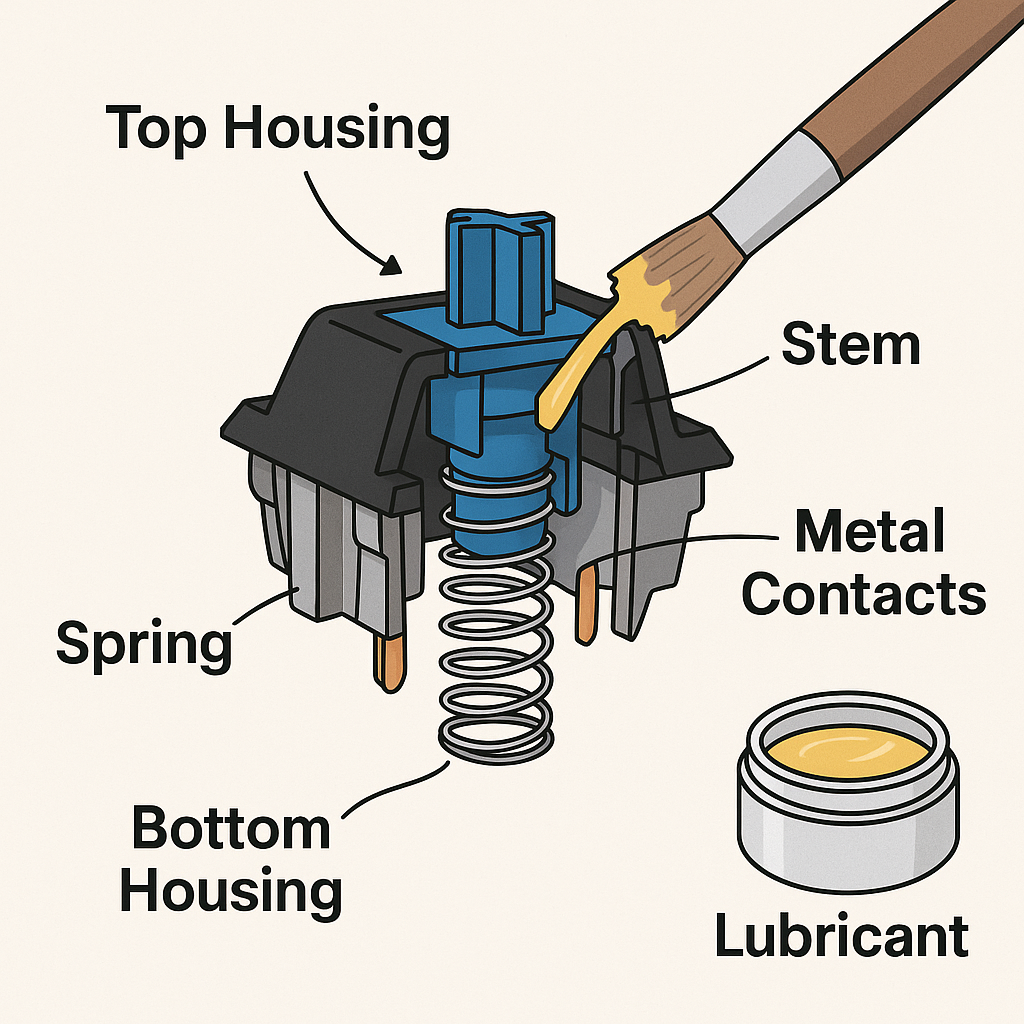
To understand lubed switches, it helps to know what mechanical switches are and how they function. Unlike membrane keyboards, mechanical keyboards use individual switches under each key. A switch is a small mechanical component made of several parts, including the stem, spring, top housing, bottom housing, and metal contacts. When you press a key, the stem moves down, compresses the spring, and activates the metal contacts. This sends a signal to the computer. Since so many parts touch and slide against each other inside the switch, friction is created. This friction can cause the switch to feel rough, scratchy, or noisy. Lubing switches aims to reduce that friction and make every keypress smoother.
What Are Lubed Switches?
Lubed switches are simply mechanical switches that have had a special lubricant applied to their moving parts. The lubricant helps the inside elements slide more easily, reduces unnecessary noise, and creates a smoother keypress. The lubrication used in mechanical keyboards is not regular household oil. Instead, it is a specially formulated grease or oil designed for plastics and mechanical components. When switches are lubricated correctly, they feel more refined, quieter, and cleaner. Even inexpensive switches can feel premium when properly lubed, which is why this mod is so popular.
Why Lubing Improves Smoothness
One of the main benefits of lubing switches is the improvement in smoothness. In unlubed switches, the plastic parts tend to rub against each other in a slightly uneven way. This creates a scratchy sensation, especially noticeable when keys are pressed slowly. Lubing fills in microscopic gaps between the moving parts, allowing the stem to glide effortlessly. This smoother motion makes typing more comfortable and enjoyable. Many people who try lubed switches for the first time are surprised at how much softer and more controlled their keyboards feel.
How Lubing Affects Sound
Sound is another major reason people love lubed switches. When switches are unlubed, the movement of the stem and spring often produces sharp clacks, hollow sounds, or metallic ringing. This ringing, often called “spring ping,” can be annoying during long typing sessions. Lubing dampens these unwanted noises, giving the keyboard a deeper, cleaner sound. Instead of high-pitched clicks or rattles, lubed switches produce a smooth, muted, or “thocky” sound that many people find satisfying. Whether you prefer a quiet keyboard or enjoy deeper tones, lubing helps achieve a more pleasant sound profile.
Types of Switches and How Lubing Affects Them
Different switch types benefit from lubrication in different ways. Linear switches, which have a straight up-and-down motion with no tactile bump, gain the most from lubing. Since their design depends purely on smooth travel, lubrication dramatically improves their performance. Tactile switches, which include a noticeable bump during the keypress, also benefit from lubing, but the process must be done carefully. Too much lubrication can soften the bump and change the switch’s feel. Clicky switches, which create a distinct click sound, are usually not lubed because lubrication can interfere with the click mechanism. For beginners, linear and tactile switches are the best starting point when exploring lubed switches.
Factory-Lubed vs. Hand-Lubed Switches
You will often see switches described as factory-lubed or hand-lubed. Factory-lubed switches come pre-lubed from the manufacturer. They are convenient because you don’t need to do anything yourself, and they typically feel smoother than dry switches. However, factory lubrication can sometimes be inconsistent, with some switches receiving more or less lube than others. Hand-lubed switches, on the other hand, are manually opened and lubricated by an individual. This allows for precise, even application and generally produces the best possible feel and sound. While hand-lubed switches offer the best results, they also require more time and effort.
The Process of Lubing Switches
Lubing switches requires opening each switch, applying lubricant to the stem, spring, and housing, then reassembling it. The process begins by using a switch opener or a thin tool to separate the switch into its individual parts. The spring can be lubricated using a small amount of thin oil or by placing all springs in a small bag with a few drops of oil and shaking them until coated. The stem is brushed with a small amount of thicker grease along the sides and rails. Care must be taken on tactile stems to avoid weakening the bump. The housing is then lightly coated in the areas where the stem slides. After all parts are lubricated, the switch is reassembled. This process must be repeated for each switch, which is why lubing a full keyboard can be time-consuming.
Feel and Sound After Lubing
A properly lubed switch feels dramatically different from an unlubed one. The keypress becomes smoother, with no roughness at the beginning or end of the stroke. The switch feels more controlled and more consistent across all keys. Sound is also noticeably improved. Instead of sharp clacks or metallic pings, the keyboard produces soft, refined tones. Many people describe lubed switches as buttery, creamy, or silky. These improvements make typing more enjoyable whether you type a lot of documents, play games for long hours, or simply enjoy a comfortable keyboard.
Should Beginners Use Lubed Switches?
Beginners benefit greatly from using lubed switches because they offer a smoother and more premium experience right from the start. If you don’t want to lube switches yourself, buying factory-lubed models is a simple solution. They provide a noticeable improvement over dry switches and require no additional tools or effort. If you enjoy hands-on projects, lubing switches yourself is a rewarding skill to learn. It allows you to customize the feel and sound exactly to your preference, and it can make even an inexpensive keyboard feel like a high-end one.
Common Mistakes Beginners Should Avoid
While lubing switches is beginner-friendly, there are a few mistakes to watch out for. Applying too much lubricant can make switches feel heavy or mushy. Using the wrong type of lubricant can damage the plastic or attract dust. Lubing tactile switches incorrectly can lessen or completely remove the tactile bump. Because of these risks, beginners should start with small amounts of lube and practice on a few switches before moving on to the entire keyboard.
Do All Switches Need to Be Lubed?
Not every switch needs lubrication. Some premium switches come smooth from the factory and don’t require much improvement. Clicky switches generally should not be lubed because lubrication can interfere with their click bar or click jacket mechanism. However, most linear and tactile switches benefit greatly from lubrication. Even mid-range switches that feel acceptable out of the box often feel significantly better after being properly lubed.
Buying Lubed Switches or Lubing Them Yourself
When deciding between buying pre-lubed switches or lubing them yourself, it depends on your goals and interest level. Buying pre-lubed switches is ideal for beginners who want an easy, fast improvement with no effort. Lubing switches yourself is best for users who enjoy customization and want the highest quality results. If you prefer your keyboard to feel and sound exactly the way you like, hand-lubing gives you the most control.
FAQs About Lubed Switches
What exactly does lubing a switch do?
Lubing a switch reduces friction between the moving parts inside the switch, making each keypress feel smoother and quieter. When the stem and spring move inside the housing, they naturally produce resistance and noise. Applying the right lubricant softens these movements, gives the switch a more premium feel, and greatly improves sound quality. The result is a keyboard that feels more controlled and comfortable during long typing or gaming sessions.
Are lubed switches good for gaming?
Lubed switches are excellent for gaming because they provide faster, smoother, and quieter keypresses. Competitive gamers often prefer lubricated linear switches because the smooth travel helps with rapid movements and repeated keypresses. The reduction in friction can make keys feel more responsive, helping players execute actions more consistently. Whether you play FPS, MOBA, or fast-paced games, lubed switches can enhance your overall gameplay experience.
Do lubed switches make a keyboard quieter?
Yes, lubed switches make a keyboard noticeably quieter by removing unwanted noises such as spring ping, scratchiness, and harsh clacks. When switches are unlubed, the plastic parts and spring produce sharp sounds that can be distracting. Lubrication softens these tones and gives the keyboard a deeper and smoother sound. While it won’t make the keyboard silent, it significantly reduces unpleasant noise, making it more suitable for shared spaces or nighttime use.
Can beginners lube switches?
Beginners can absolutely lube switches, even without prior experience. The process is simple enough once you understand the steps, although it does require patience and time. Many newcomers start with a few practice switches before fully committing to a full set. With the right tools and a steady hand, even beginners can achieve great results. If someone prefers not to open switches themselves, factory-lubed or pre-lubed switches offer an easy alternative.
Do all switches need to be lubed?
Not all switches require lubrication. Many higher-end switches already come smooth enough from the factory, and clicky switches generally should not be lubed because lubrication can affect their click mechanism. However, most linear and tactile switches benefit greatly from lubricating, especially budget models. The improvement in feel and sound is often dramatic, so even though lubing is optional, it’s one of the most effective upgrades for mechanical keyboards.
Does lubing switches make them last longer?
Lubing switches can extend their lifespan because it reduces wear on the plastic components. Less friction means the switch stem and housing experience less grinding over time, which helps maintain smoothness for longer. Although the difference in durability may not be huge, lubed switches tend to stay consistent and pleasant to use far longer than unlubed ones. This makes lubing not only a comfort upgrade but also a practical one.
What happens if I use too much lube?
Using too much lube can make switches feel mushy, heavy, or slow. Over-lubing reduces the crispness of the keystroke and can interfere with the switch’s intended feel, especially on tactile models where the bump can disappear if overlubed. This is why beginners are encouraged to apply lubricant lightly. A small amount is enough to noticeably improve the switch without affecting its performance negatively.
Is it okay to lube clicky switches?
Lubing clicky switches is generally discouraged because it can interfere with the click mechanism that creates their signature sound. Clicky switches rely on a click bar or click jacket, and lubrication can soften or completely remove the click. Some advanced users apply very selective lubrication to reduce spring ping, but beginners should avoid lubing clicky switches unless they fully understand how the mechanism works.
What type of lube should I use for my switches?
Switch lubrication requires specific greases or oils designed for mechanical switches. Thick lubes like Krytox 205g0 are ideal for stems and housings, while lighter oils like Krytox 105 are used for springs. Using household products such as WD-40 or cooking oil is not recommended, as these can damage plastic, attract dust, or make the keys feel sticky. Using the right lube ensures smoother performance and preserves the switch’s quality.
Final Thoughts
Lubed switches are one of the most powerful upgrades you can make to a mechanical keyboard. They reduce friction, remove unwanted noise, and give your keyboard a smoother, richer, and more premium feel. Whether you choose factory-lubed switches, hand-lubed switches, or decide to learn the process yourself, the improvement is instantly noticeable. For beginners entering the world of mechanical keyboards, understanding lubed switches is an essential step in creating a keyboard that feels satisfying, enjoyable, and truly customized to your liking.

Jawad is a passionate tech enthusiast and writer who loves exploring the latest trends in hardware, gadgets, and digital innovation. With a sharp eye for performance and value, he delivers in-depth recommendations and buying guides to help readers make smarter tech decisions.