
Last Updated on February 3, 2026 by Jawad
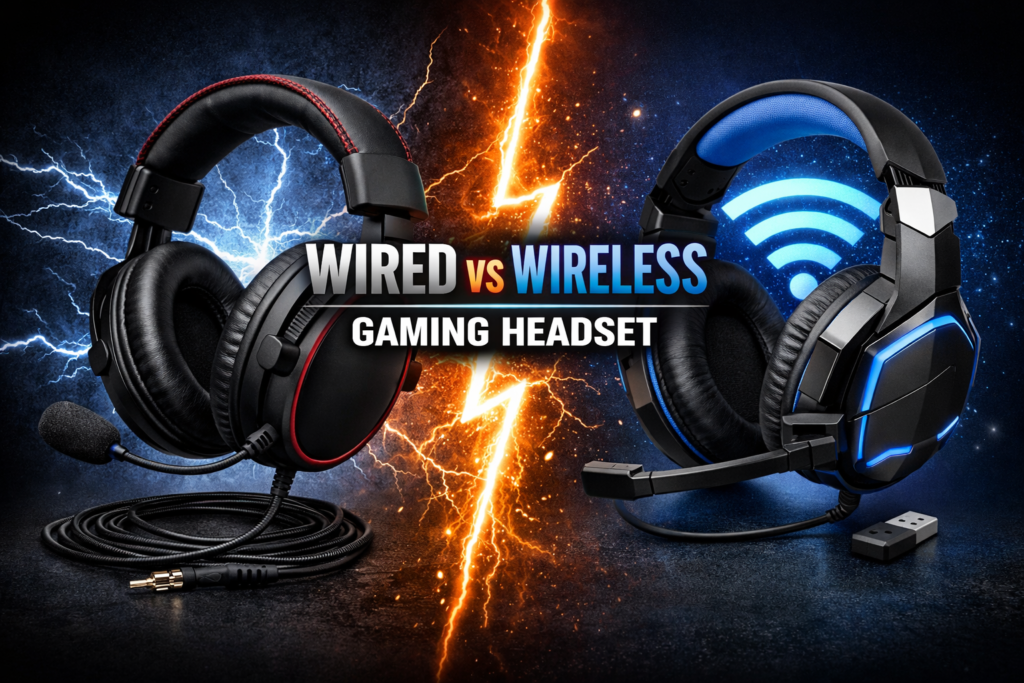
Introduction to Gaming Headsets
Gaming headsets are no longer just accessories; they are core tools that shape how players experience games. From competitive shooters and multiplayer strategy games to immersive single-player adventures, audio quality and communication play a critical role. One of the most common and important decisions gamers face is choosing between a wired gaming headset and a wireless gaming headset. While both options are designed to deliver immersive sound and clear voice communication, they differ significantly in performance, convenience, durability, and overall gaming experience. Understanding these differences in depth helps gamers make an informed decision that matches their play style and expectations.
Wired vs Wireless Gaming Headset: Comparison Table
Here’s a clear and detailed comparison table between Wired vs Wireless Gaming Headsets:
| Feature / Aspect | Wired Gaming Headset | Wireless Gaming Headset |
|---|---|---|
| Audio Quality | Often higher fidelity with uncompressed signal | Very good on modern models, but may use compression |
| Latency (Audio Delay) | Virtually zero — best for competitive gaming | Slight delay possible; low-latency wireless reduces it |
| Reliability | Extremely consistent; no signal drops | Can be subject to interference or signal issues |
| Battery Requirement | No battery — unlimited use | Requires charging; battery life varies |
| Convenience / Mobility | Limited by cable | Freedom of movement; no cable clutter |
| Comfort for Long Sessions | Slight restriction due to cable | More comfortable movement-wise |
| Ease of Setup | Plug-and-play | May require pairing or dongle setup |
| Multi-Device Switching | Requires switching cables or adapters | Can switch via Bluetooth or multipoint |
| Compatibility | Works universally with 3.5mm devices; USB varies | Depends on wireless type (dongle/Bluetooth) |
| Microphone Performance | Stable, consistent audio | Good on quality models; may compress voice |
| Battery Longevity / Wear | No degradation over time | Batteries will degrade annually |
| Durability & Repairs | Easier to repair (cable replacement) | Harder to repair; internal batteries |
| Price (for same quality) | Usually lower | Usually higher due to wireless tech |
| Best Use Case | Competitive play, PC e-sports, audiophile focus | Lounge/console play, flexible setup |
| Desk Clutter | Higher (cables) | Lower |
| Travel / Portability | Moderate | Excellent, especially Bluetooth models |
Understanding the Core Difference Between Wired and Wireless Headsets
The fundamental distinction between wired and wireless gaming headsets lies in how audio data travels from the gaming device to the headset. Wired headsets transmit sound through a physical cable, usually via a 3.5mm audio jack or a USB connection. Wireless headsets transmit audio using radio frequency signals or Bluetooth technology, eliminating the need for cables. This difference directly affects sound quality, latency, power requirements, and overall reliability. While wireless technology has advanced significantly, wired connections still offer unmatched simplicity and consistency, which continues to make them relevant for many gamers.
Sound Quality and Audio Performance
Sound quality is one of the most critical aspects of a gaming headset, as it directly impacts immersion and awareness. Wired gaming headsets traditionally offer superior audio quality because they transmit uncompressed or minimally processed sound signals. This results in clearer highs, richer mids, and more controlled bass. In competitive games, this clarity helps players identify subtle audio cues such as footsteps, reload sounds, or enemy movement. Since wired headsets are not affected by signal interference, the audio experience remains consistent across different environments.
Wireless gaming headsets have improved greatly in terms of sound quality, especially those using dedicated low-latency wireless dongles. These headsets are optimized for gaming and provide strong spatial audio and punchy bass that rivals many wired models. However, wireless audio still relies on some level of compression, which may slightly reduce detail compared to wired connections. For most gamers, this difference is barely noticeable, especially during fast-paced gameplay. Only highly sensitive listeners or professional players may consistently notice the gap in audio fidelity.
Latency and Audio Synchronization in Gaming
Latency refers to the delay between an in-game event and the moment you hear it through your headset. Wired gaming headsets have virtually zero latency because the audio signal travels instantly through the cable. This makes them ideal for competitive gaming, where precise timing can determine success or failure. In fast-paced shooters or reaction-based games, even a small audio delay can affect player performance and decision-making.
Wireless gaming headsets may introduce slight latency due to signal processing and transmission. Older Bluetooth-based headsets were known for noticeable delays, which made them unsuitable for serious gaming. Modern wireless gaming headsets, however, use advanced wireless technology that significantly reduces latency. While they may still not match the absolute immediacy of wired headsets, the delay is often small enough that most gamers do not notice it during normal play. Competitive esports players still tend to favor wired headsets, but casual and mid-level gamers can comfortably use wireless options without major drawbacks.
Comfort, Mobility, and Physical Freedom
Comfort is essential for long gaming sessions, and this is an area where wireless gaming headsets often excel. Without a cable restricting movement, wireless headsets allow gamers to sit back, stand up, or move around freely. This freedom is particularly appealing for console gaming, living room setups, and streaming sessions where the player may need to step away from the screen briefly. Wireless headsets also help maintain a clean and uncluttered gaming setup, reducing the mess of tangled cables on desks.
Wired gaming headsets, while sometimes lighter due to the absence of batteries, can feel restrictive because of their cables. The cable can pull slightly when the player moves or get caught on furniture or peripherals. Over time, this can become uncomfortable or distracting. However, some gamers prefer the stability and predictability of a wired connection, as it removes concerns about signal drops or battery levels during intense gameplay.
Battery Life and Power Management
One of the most important practical differences between wired and wireless gaming headsets is power management. Wired headsets do not rely on batteries, allowing gamers to play for unlimited hours without interruption. As long as the headset is connected, it will continue to function reliably. This makes wired headsets particularly appealing for long gaming sessions, tournaments, or overnight gaming marathons.
Wireless gaming headsets depend entirely on internal batteries, which must be recharged regularly. Battery life varies greatly depending on the model, volume levels, and additional features such as RGB lighting or active noise cancellation. While many modern wireless headsets offer impressive battery life, running out of power in the middle of a game can be frustrating. Over time, battery capacity naturally degrades, which may reduce the headset’s lifespan or require replacement.
Microphone Quality and Communication Clarity
Clear communication is essential in multiplayer gaming, and microphone performance plays a major role. Wired gaming headsets often deliver consistent microphone quality because the audio signal travels directly through the cable. This reduces the risk of interference, compression, or signal loss. Many wired headsets are known for providing reliable and natural voice reproduction, making them popular among competitive gamers.
Wireless gaming headsets can also offer excellent microphone quality, especially in higher-end models. Advanced wireless headsets often include noise reduction and voice enhancement features that help maintain clarity during online matches. However, lower-cost wireless headsets may compress microphone audio more heavily, resulting in reduced clarity. While the difference is smaller than it once was, wired headsets still hold a slight advantage in microphone consistency and reliability.
Durability, Longevity, and Maintenance
Durability is another important factor to consider, especially for gamers who use their headsets daily. Wired gaming headsets generally have simpler internal designs, which can make them more durable and easier to repair. If a cable becomes damaged, it can often be replaced, extending the life of the headset. Many wired headsets last for years with minimal maintenance.
Wireless gaming headsets contain more complex components, including batteries, charging circuits, and wireless transmitters. These components are more prone to wear over time, especially the battery. Once a wireless headset’s battery degrades significantly, it may need to be replaced or the headset may need to be retired altogether. While build quality has improved, wireless headsets typically have a shorter usable lifespan compared to wired models.
Compatibility Across Devices and Platforms
Wired gaming headsets offer broad compatibility with a wide range of devices. Models with a 3.5mm jack work with PCs, consoles, laptops, and mobile devices. USB wired headsets may require specific drivers but generally function well across major platforms. This makes wired headsets a flexible option for gamers who use multiple systems.
Wireless gaming headsets may have more limited compatibility depending on their design. Some models are optimized for PC or specific consoles and may not work seamlessly across all platforms. Bluetooth-enabled wireless headsets provide greater versatility, but switching between devices can sometimes be inconvenient. Hybrid wireless headsets that support both Bluetooth and USB dongles offer the most flexibility but often come at a higher price.
Price, Value, and Overall Cost
Cost plays a major role in the wired versus wireless decision. Wired gaming headsets typically offer better value for money when it comes to audio performance and reliability. At the same price point, a wired headset usually delivers higher sound quality and microphone clarity than a wireless one. This makes wired headsets attractive to budget-conscious gamers who prioritize performance over convenience.
Wireless gaming headsets are generally more expensive due to the added cost of wireless technology, batteries, and extra features. While they provide greater convenience and freedom, gamers often pay a premium for these benefits. For players who value comfort and flexibility, the higher cost may be justified, but for others, wired headsets remain the more economical choice.
Choosing the Right Headset for Your Gaming Style
The best gaming headset ultimately depends on how and where you play. Competitive gamers who value precision, reliability, and uninterrupted performance often prefer wired headsets. Casual gamers, console players, and those who enjoy relaxed gaming sessions may find wireless headsets more comfortable and convenient. Streamers and content creators may choose based on their setup, balancing audio quality with ease of movement and device compatibility.
Wired vs Wireless Gaming Headsets: Pros and Cons
Wired Gaming Headset: Pros and Cons
Wireless Gaming Headset: Pros and Cons
Neither option is universally better. Wired gaming headsets are ideal for players who want the best sound quality, zero latency, and maximum reliability. Wireless gaming headsets are better for gamers who prefer freedom of movement, comfort, and a clean setup. The best choice depends on your gaming style and priorities.
In most cases, yes. Wired gaming headsets usually provide better and more consistent sound quality because they transmit audio without wireless compression. This results in clearer details and more accurate sound positioning, especially useful for competitive gaming.
Some wireless gaming headsets can have slight audio delay, especially Bluetooth-only models. However, modern wireless gaming headsets that use low-latency 2.4GHz wireless technology have very minimal delay that most gamers do not notice during gameplay.
High-quality wireless gaming headsets can be suitable for competitive gaming, but many professional players still prefer wired headsets due to zero latency and guaranteed stability. For casual and semi-competitive players, modern wireless headsets perform very well.
Most wireless gaming headsets work with PCs and consoles, but compatibility depends on the model. Some are designed specifically for PC or console use. Headsets that support both USB wireless dongles and Bluetooth offer the best cross-platform compatibility.
For beginners, wired gaming headsets are usually the safer choice because they are affordable, simple to use, and reliable. Wireless headsets are better suited for users who want flexibility and are comfortable managing charging and connectivity.
Final Thoughts on Wired vs Wireless Gaming Headsets
Both wired and wireless gaming headsets have distinct strengths and weaknesses, and neither option is universally superior. Wired headsets excel in sound quality, latency, durability, and long-term reliability, making them ideal for competitive and performance-focused gamers. Wireless headsets stand out for comfort, mobility, and modern convenience, offering a flexible and enjoyable gaming experience. By carefully considering factors such as sound performance, latency, battery life, comfort, compatibility, and budget, gamers can choose the headset that best enhances their gaming experience. The right choice is not about trends or popularity, but about selecting the headset that fits your personal gaming needs and preferences.

Jawad is a passionate tech enthusiast and writer who loves exploring the latest trends in hardware, gadgets, and digital innovation. With a sharp eye for performance and value, he delivers in-depth recommendations and buying guides to help readers make smarter tech decisions.